 Jenny Allyeen
 Fashion design is a creative field that combines imagination, technical skills, and attention to detail. Whether you are a beginner learning the basics or an experienced designer creating professional collections, having the right fashion designer tools can make the design process easier and more efficient.
From sketching ideas to measuring fabric and creating finished garments, designers use a wide range of tools at different stages of their work. The right equipment not only improves accuracy but also helps turn creative ideas into wearable designs.
In this guide, we will explore the most important fashion design tools and explain how each one can help designers develop their skills and create better clothing.
What Are Fashion Designer Tools?
Fashion designer tools are equipment, supplies, and digital resources used to design, develop, and create clothing and fashion products. They can include simple items such as pencils, measuring tapes, and scissors as well as advanced tools such as sewing machines and fashion design software.
The tools a designer needs can vary depending on their area of work. A student may only need basic sketching and sewing supplies, while a professional designer may use specialized pattern-making equipment and computer-aided design software.
1. Fashion Sketchbook
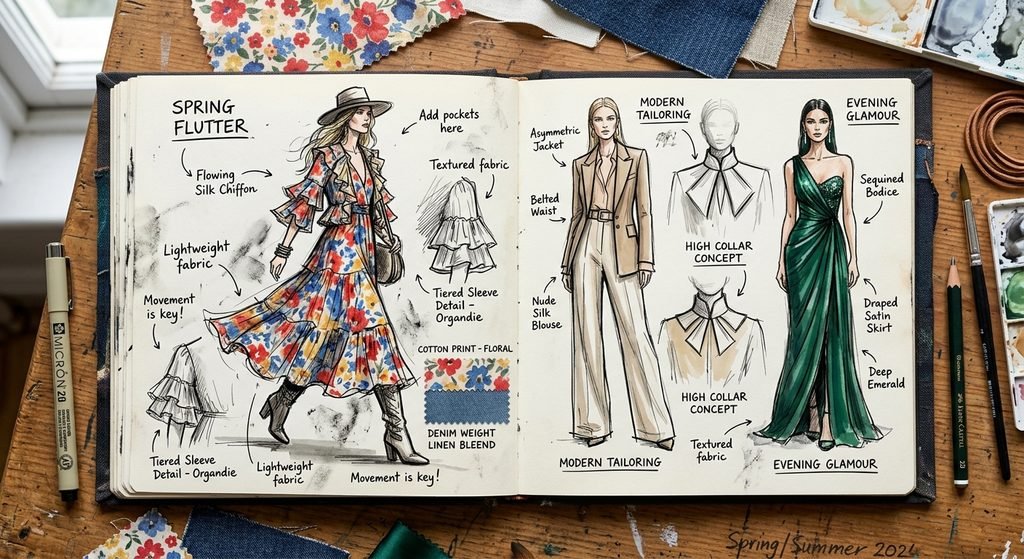
A sketchbook is one of the most useful tools for a fashion designer. It provides a place to record ideas, draw clothing designs, experiment with silhouettes, and develop collections.
Designers can use a sketchbook to create quick fashion illustrations before developing a final design. Keeping sketches together also makes it easier to track creative ideas over time.
A good sketchbook should have paper suitable for pencils, markers, colored pencils, or other preferred drawing materials.
2. Fashion Pencils and Drawing Pens
Pencils and drawing pens are essential for creating fashion illustrations. Different pencil grades can be used to create light construction lines, darker outlines, and shading.
Fine-tip pens can also help designers add details such as seams, pleats, buttons, pockets, and fabric textures.
For beginners, a basic collection of pencils, erasers, rulers, and black pens is usually enough to start practicing fashion illustration.
3. Measuring Tape
A measuring tape is an essential tool for taking accurate body and garment measurements. Unlike a rigid ruler, flexible measuring tape can easily follow the shape of the body.
Designers use measuring tapes for measurements such as:
- Bust or chest
- Waist
- Hips
- Shoulder width
- Sleeve length
- Garment length
- Neck circumference
Accurate measurements are especially important when creating custom garments and developing patterns.
4. Fashion Rulers
Fashion designers use several types of rulers when creating patterns and technical drawings. Straight rulers are useful for drawing precise lines, while curved rulers help create armholes, necklines, hips, and other garment shapes.
Common pattern-making rulers include:
- Straight rulers
- L-shaped rulers
- French curves
- Hip curves
- Pattern grading rulers
These tools help designers create cleaner and more accurate patterns.
5. Fabric Scissors
A quality pair of fabric scissors is another important item in a fashion designer’s toolkit. Fabric scissors are designed specifically for cutting textiles and should be kept sharp.
Using the right scissors can make cutting smoother and help prevent uneven fabric edges.
It is generally better to keep fabric scissors separate from paper scissors because cutting paper can reduce their sharpness over time.
6. Sewing Machine
A sewing machine can significantly speed up the garment-making process. Designers use sewing machines to join fabric pieces, create seams, attach details, and produce finished garments.
There are many types of sewing machines available, from basic domestic models to specialized professional machines.
Beginners can start with a reliable standard sewing machine and gradually explore additional machines as their skills develop.
7. Needles and Sewing Supplies
Even designers who regularly use a sewing machine need basic hand-sewing supplies. Needles are useful for finishing details, attaching buttons, making small repairs, and handling delicate fabrics.
A basic sewing kit may include:
- Hand-sewing needles
- Thread
- Pins
- Safety pins
- Seam ripper
- Thimble
- Small scissors
- Pin cushion
These simple fashion design supplies can be extremely useful during garment construction.
8. Pattern-Making Tools
Pattern making is an important part of fashion design because it transforms a two-dimensional idea into pieces that can eventually become a three-dimensional garment.
Pattern-making tools can include pattern paper, rulers, curves, tracing wheels, pencils, and pattern weights.
Designers use these tools to develop and adjust patterns for different sizes, styles, and body shapes.
9. Dress Form
A dress form, also known as a mannequin, allows designers to examine how a garment looks and fits in three dimensions.
Designers can pin fabric directly onto the form, adjust the shape, experiment with draping, and develop new silhouettes.
Dress forms are particularly useful for designers who work with draping techniques and want to see how fabric behaves on a body-like shape.
10. Fabric and Textile Samples
Fabric samples are valuable for understanding how different textiles behave. A designer can compare fabrics based on weight, texture, stretch, transparency, drape, and color.
Creating a fabric swatch collection can also make it easier to select suitable materials for future designs.
Designers may organize swatches by fabric type, color, season, or project.
11. Seam Ripper
Mistakes are a normal part of garment construction, which makes a seam ripper an important tool. It allows designers to carefully remove stitches without unnecessarily damaging the fabric.
A seam ripper is especially helpful when fitting garments, correcting seams, or changing design details.
12. Fashion Design Software
Modern fashion design increasingly combines traditional techniques with digital technology. Fashion design software can help designers create digital sketches, technical drawings, patterns, mood boards, and garment concepts.
Digital tools can also make it easier to experiment with colors, prints, proportions, and design variations without starting from scratch each time.
Learning digital fashion design tools can be particularly valuable for designers interested in professional fashion careers.
13. Color Tools
Color plays a major role in fashion. Designers often use color charts, swatches, markers, colored pencils, and digital color palettes to develop collections.
A well-planned color palette helps create consistency across different garments and can communicate the mood of a collection.
Designers may create seasonal palettes based on inspiration from nature, culture, art, architecture, or current fashion directions.
14. Mood Board Materials
Mood boards help designers organize the visual direction of a collection. They can include photographs, fabric samples, colors, illustrations, textures, typography, and inspirational references.
A mood board allows designers to communicate the overall feeling of a collection before developing individual garments.
Digital mood boards can also be created using design applications, making them easy to edit and share.
How to Choose the Right Fashion Designer Tools
You do not need to purchase every fashion design tool at once. Beginners can start with essential supplies and gradually build their collection as their skills improve.
Consider your specific needs, budget, and design specialization. For example, someone focused on fashion illustration may prioritize drawing supplies, while someone interested in garment construction may need a sewing machine, dress form, and pattern-making tools.
Quality is also important. Investing in durable tools can save money over time because good equipment can last longer and perform more consistently.
Essential Fashion Designer Tools for Beginners
If you are just starting fashion design, a basic toolkit could include:
- Sketchbook
- Pencils and eraser
- Drawing pens
- Measuring tape
- Fabric scissors
- Sewing needles
- Thread
- Pins
- Seam ripper
- Basic rulers
- Pattern paper
- Fabric samples
- Beginner sewing machine
Once you become more comfortable with the basics, you can add specialized tools and digital design software.
Final Thoughts
The right fashion designer tools can make a significant difference in the design process. From a simple pencil and sketchbook to advanced digital software and professional sewing equipment, every tool has a specific purpose.
The most important thing is not owning the largest collection of equipment. Instead, designers should learn how to use their tools effectively and choose equipment that supports their particular creative process.
Whether you are studying fashion, developing your own clothing line, or simply exploring fashion design as a hobby, starting with the essential tools can help you turn creative ideas into practical and original designs.


[…] your specialty is styling, clothing, trends, beauty, accessories, or personal style, a well-written guest post can provide valuable […]