 Jenny Allyeen
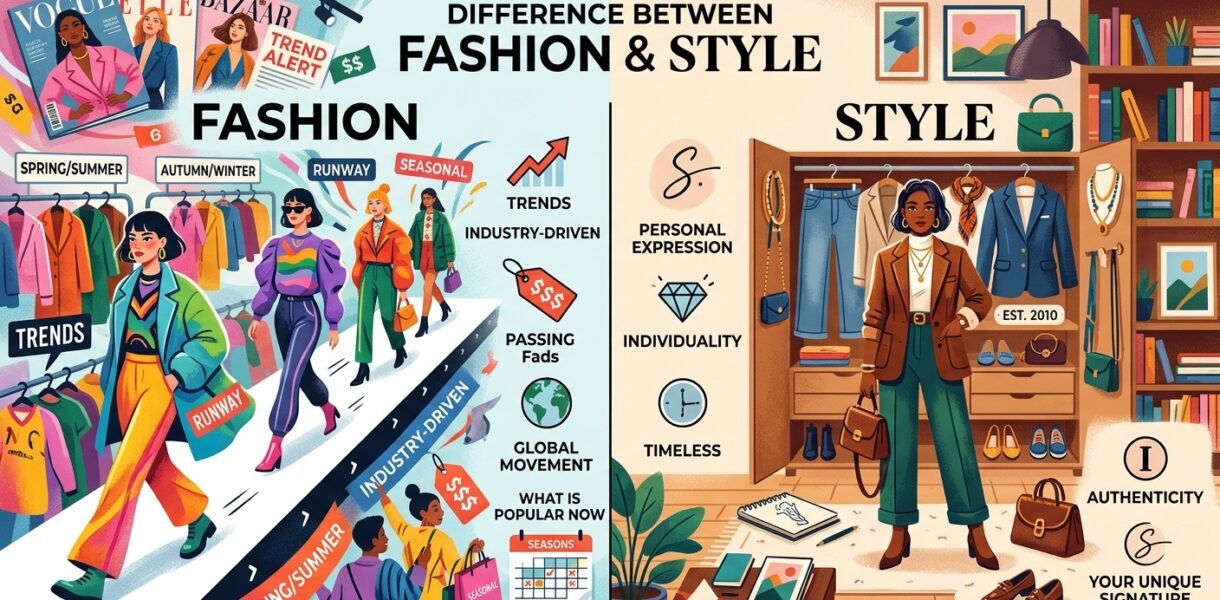
 Fashion and style are two words that are often used interchangeably, but they do not mean exactly the same thing. Both are connected to clothing, beauty, accessories, and personal appearance, yet they represent different ideas.
Fashion is often influenced by current trends, designers, seasons, and popular culture. Style, on the other hand, is more personal. It reflects how an individual chooses to express themselves through clothing and appearance.
Understanding the difference between fashion and style can help you make better wardrobe choices and develop a look that feels authentic to you.
What Is Fashion?
Fashion refers to the clothing, accessories, colors, designs, and beauty trends that are popular during a particular period. Fashion changes continuously as designers, brands, celebrities, influencers, and cultural movements introduce new ideas.
For example, wide-leg trousers, oversized blazers, minimalist outfits, or a particular color may become popular during one season. As trends change, different silhouettes and designs can become fashionable.
Fashion can include:
- Clothing trends
- Shoes
- Handbags
- Jewelry
- Hairstyles
- Makeup trends
- Designer collections
- Seasonal colors
- Runway trends
- Street-style trends
Fashion is therefore closely connected to change and what is currently popular.
What Is Style?
Style is the way a person expresses their personality and preferences through their appearance. Unlike fashion trends, personal style does not necessarily change every season.
Someone may prefer classic clothing, while another person may enjoy streetwear, vintage fashion, minimalist outfits, or bold colors.
Personal style can be influenced by:
- Personality
- Lifestyle
- Culture
- Comfort
- Personal preferences
- Body proportions
- Environment
- Budget
- Favorite colors
Style is ultimately about how you choose to put different pieces together.
Fashion vs. Style
The simplest way to understand the difference is:
Fashion is what is popular. Style is how you make it your own.
Fashion introduces trends, while style determines whether and how you incorporate those trends into your wardrobe.
For example, suppose oversized blazers become a major fashion trend. You might see them everywhere in stores, magazines, and social media. Wearing an oversized blazer because it is currently popular is following fashion.
However, styling that blazer with your favorite jeans, shoes, jewelry, and colors in a way that reflects your personality is personal style.
Key Differences Between Fashion and Style
| Fashion | Style |
|---|---|
| Changes with trends | Can remain consistent |
| Influenced by designers and culture | Influenced by personal preferences |
| Often seasonal | Can be timeless |
| Focuses on what is popular | Focuses on individual expression |
| Can be temporary | Can develop over many years |
| Often reflects current trends | Reflects personality and lifestyle |
This difference shows why someone can be fashionable without necessarily having a distinctive personal style, while another person may have excellent style without following every current trend.
Is Fashion More Important Than Style?
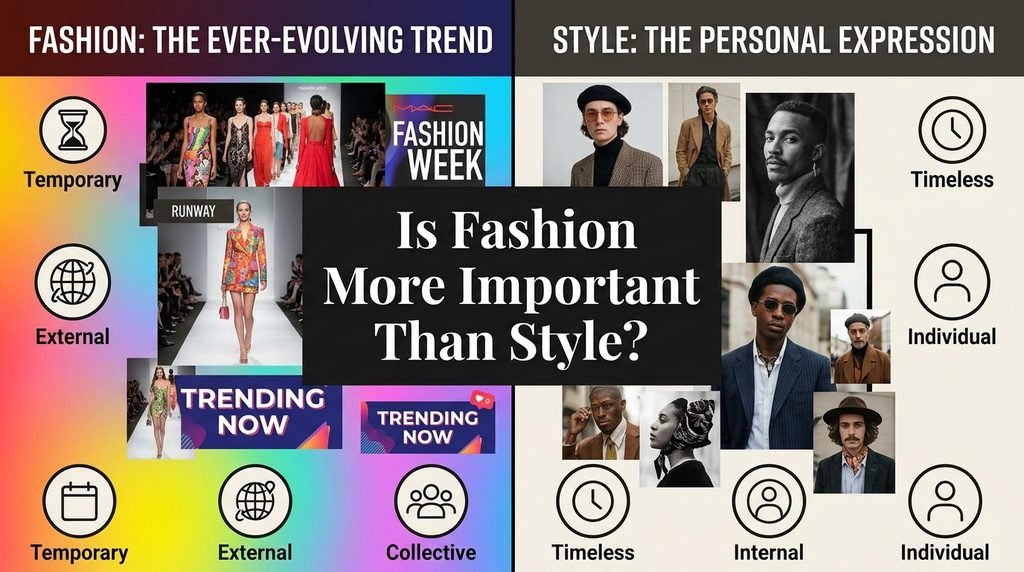
Neither fashion nor style is more important. They simply serve different purposes.
Fashion can provide inspiration and introduce new ideas. It allows people to experiment with silhouettes, colors, fabrics, and accessories.
Style helps people decide which of those ideas actually work for them.
You do not have to follow every fashion trend to look stylish. In fact, understanding your personal style can make shopping easier because you know which trends fit naturally into your wardrobe.
How Fashion Influences Personal Style
Although fashion and style are different, they are closely connected.
New fashion trends can inspire people to experiment with their appearance. Someone who normally wears classic clothing might add a trendy handbag or modern pair of shoes to their wardrobe.
This creates a balance between current fashion and individual style.
The key is to choose trends selectively. Instead of buying everything that becomes popular, consider whether a particular trend fits your existing wardrobe and lifestyle.
How to Develop Your Personal Style
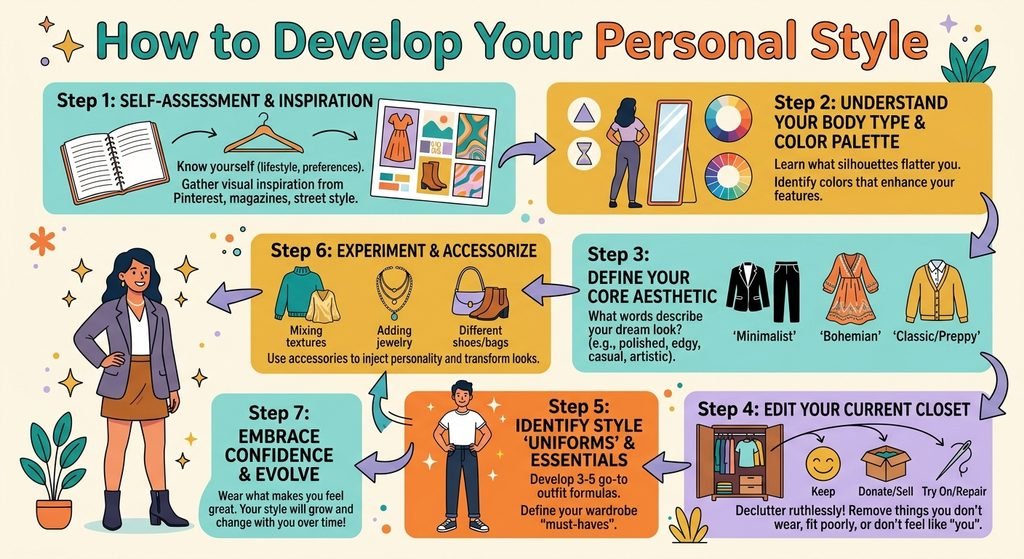
Developing personal style takes time. It is not necessary to completely change your wardrobe overnight.
Start by identifying the clothing you naturally enjoy wearing. Look at the colors, silhouettes, fabrics, and accessories you repeatedly choose.
1. Identify Your Favorite Pieces
Look through your wardrobe and find the items you wear most often. These pieces can reveal your natural style preferences.
You might notice that you frequently choose:
- Neutral colors
- Denim
- Tailored clothing
- Oversized pieces
- Dresses
- Sneakers
- Classic accessories
These preferences can help define your personal style.
2. Choose a Color Palette
Having a few favorite colors can make it easier to create outfits.
A neutral wardrobe might include black, white, beige, gray, navy, and brown. If you prefer brighter fashion, you can introduce colors such as red, pink, blue, green, or yellow.
Your color palette does not need to be restrictive. It simply gives your wardrobe a sense of consistency.
3. Focus on Fit
Good style is not only about expensive clothing. Fit and proportions can make a significant difference.
A simple outfit can look polished when the clothing fits well and works with your body proportions.
Consider how different cuts of trousers, jackets, dresses, and tops fit your preferred silhouette.
4. Add Trends Carefully
Once you understand your personal style, experiment with current fashion trends.
You might not need an entirely new wardrobe. A trendy accessory, modern shoe, or updated jacket can refresh an existing outfit.
This approach allows you to enjoy fashion while maintaining your individual identity.
Can You Be Stylish Without Following Fashion Trends?solutely.
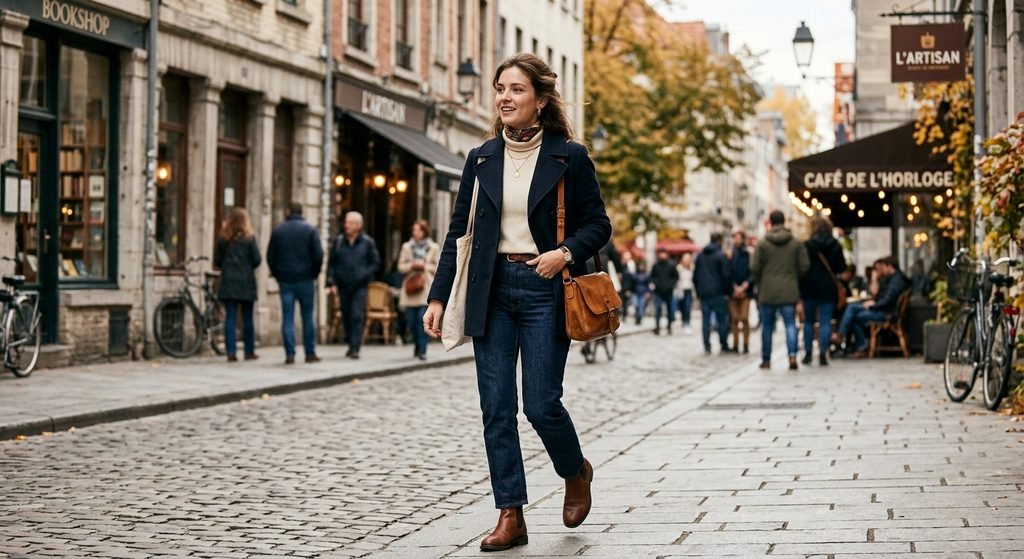
A person can have excellent personal style without following every trend. Classic clothing, well-chosen accessories, and consistent outfit combinations can create a fashionable appearance even when the individual is not wearing the latest trend.
Many timeless wardrobe staples remain stylish for years because they are not dependent on short-term trends.
Examples include:
- White shirts
- Straight-leg jeans
- Tailored trousers
- Simple blazers
- Little black dresses
- Classic loafers
- Neutral handbags
- Minimal jewelry
These pieces can be styled in modern ways while maintaining a timeless foundation.
Fashion and Style in Everyday Life
Fashion can be especially useful when you want inspiration for updating your wardrobe. Seasonal collections, fashion weeks, magazines, and social media can introduce new styling possibilities.
Style becomes important when deciding which ideas fit your life.
For example, someone working in a professional environment may prefer tailored clothing, while someone with a creative lifestyle may choose more experimental outfits.
The best wardrobe is one that works with your actual lifestyle rather than simply copying what is currently popular.
Why Personal Style Matters
Personal style can make getting dressed easier and more enjoyable. When you understand what you like, you are less likely to purchase clothing simply because it is trending.
It can also help you build a more intentional wardrobe. Instead of constantly replacing clothes, you can invest in versatile pieces that work together.
Personal style is also a form of self-expression. Clothing can communicate your mood, creativity, preferences, and personality without requiring words.
Fashion and Style: Finding the Right Balance
The best approach is not to choose between fashion and style. Instead, use fashion as inspiration while allowing personal style to guide your choices.
You can follow trends without becoming completely dependent on them.
For example, if metallic accessories become fashionable, you can add a metallic handbag or pair of shoes while keeping the rest of your outfit consistent with your usual style.
This creates a wardrobe that feels current but still personal.
Frequently Asked Questions
What is the main difference between fashion and style?
Fashion refers to trends and designs that are popular at a particular time, while style is the personal way someone chooses to express themselves through clothing and appearance.
Is fashion the same as style?
No. Fashion and style are related but different. Fashion changes frequently, while personal style can remain consistent for many years.
Can someone be stylish without following trends?
Yes. A person can have a strong personal style by wearing timeless clothing, choosing flattering fits, and combining pieces in a distinctive way.
Why does fashion change so often?
Fashion changes because of seasonal collections, designers, cultural influences, technology, entertainment, social media, and changing consumer preferences.
How can I find my personal style?
Start by identifying the clothes, colors, silhouettes, and accessories you naturally enjoy wearing. Then experiment with different combinations and selectively incorporate trends that suit you.
Final Thoughts
The difference between fashion and style is simple: fashion changes, while style is personal.
Fashion can introduce new trends and provide inspiration, but personal style determines how you use those ideas. You do not need to follow every trend to look fashionable, and you do not need an expensive wardrobe to develop great style.
The most effective approach is to understand what you like, build a wardrobe that suits your lifestyle, and use current fashion trends selectively. When fashion and personal style work together, your outfits can feel both modern and authentic.




[…] are many different fashion styles, from casual and classic to streetwear, vintage, bohemian, Y2K, old money, and eclectic […]
[…] right fashion designer tools can make a significant difference in the design process. From a simple pencil and […]