
 Jenny Allyeen
 Makeup brushes are an essential part of any beauty routine, but they can quickly collect makeup residue, oil, dirt, and bacteria. Using dirty brushes regularly can affect how smoothly makeup applies and may contribute to clogged pores and skin irritation. That is why knowing how to clean makeup brushes properly is an important part of maintaining good makeup and skincare habits.
The good news is that cleaning makeup brushes does not have to be difficult or time-consuming. With a few simple products and the right technique, you can keep your brushes soft, clean, and ready for your next makeup application.
Why Is It Important to Clean Makeup Brushes?
Every time you use a makeup brush, it can pick up foundation, concealer, powder, skin oils, and other residue. Over time, this buildup can make the bristles less effective and can transfer unwanted residue back onto your skin.
Regularly cleaning your brushes can help:
- Remove makeup buildup
- Keep brush bristles soft
- Improve makeup application
- Reduce the buildup of oil and dirt
- Help your brushes last longer
- Maintain better overall hygiene
Cleaning is especially important for brushes used with liquid or cream products because these formulas can leave more residue on the bristles.
How Often Should You Clean Makeup Brushes?
How often you should clean your brushes depends on how frequently you use them and what products you apply.
Brushes used for foundation, concealer, and other liquid or cream products should generally be cleaned more frequently than brushes used for dry powders. Brushes used around the eyes also deserve regular cleaning.
If you use your makeup brushes every day, making brush cleaning part of your weekly beauty routine is a practical approach. You may need to clean certain brushes more often if they become visibly dirty or heavily coated with product.
What You Need to Clean Makeup Brushes
You do not need expensive equipment to clean your makeup brushes. You can use:
- Lukewarm water
- A gentle brush cleanser or mild soap
- A clean towel
- A small bowl, if needed
- A brush-cleaning mat or textured surface, optional
Avoid using very hot water because excessive heat can damage the brush bristles or weaken the adhesive holding the brush together.
Step-by-Step: How to Clean Makeup Brushes
Step 1: Wet the Bristles
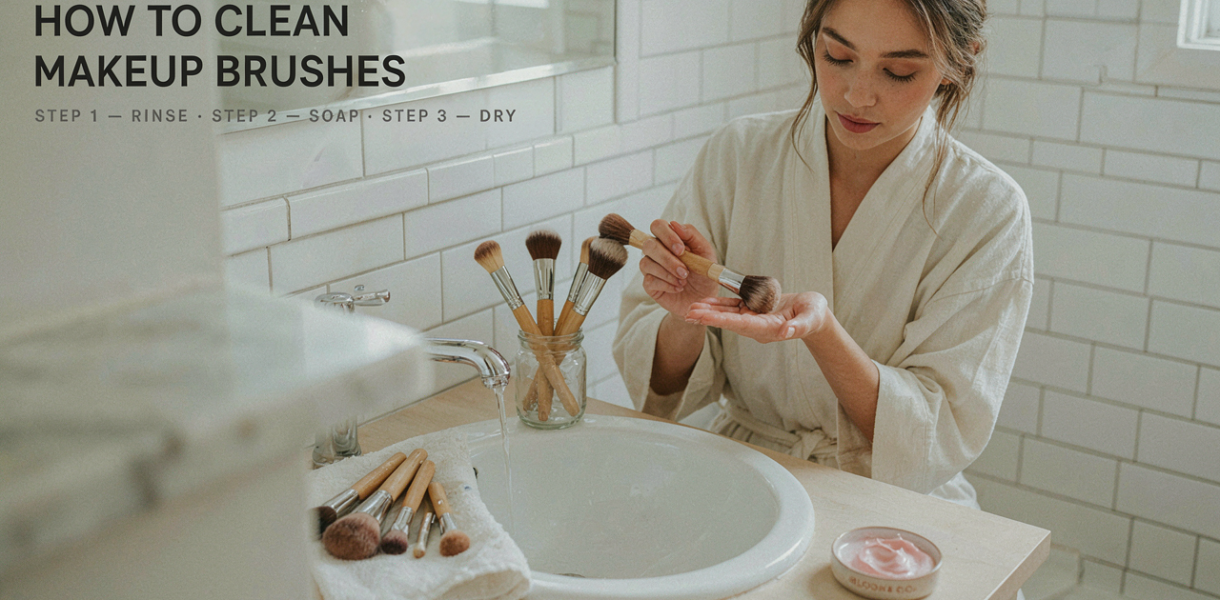
Start by rinsing the brush bristles under lukewarm running water. Keep the brush pointed downward and try not to soak the handle or the area where the bristles meet the handle.
Keeping water away from the ferrule and handle can help prevent moisture from weakening the glue over time.
Step 2: Apply Cleanser
Place a small amount of gentle brush cleanser or mild soap onto your palm or a brush-cleaning surface.
You only need a small amount. Using too much cleanser can make rinsing more difficult.
Step 3: Gently Massage the Bristles
Move the brush in gentle circular motions against your palm or cleaning surface. Work the cleanser through the bristles until makeup residue begins to loosen.
For heavily used foundation brushes, you may need to repeat this step more than once.
Be gentle. Scrubbing too aggressively can cause bristles to become damaged or fall out.
Step 4: Rinse Thoroughly
Rinse the brush under lukewarm water until the water runs clear and there is no visible cleanser or makeup residue.
Make sure all the soap is removed because leftover cleanser can make the bristles stiff after drying.
Step 5: Remove Excess Water
Once the brush is clean, gently squeeze the bristles with your fingers or use a clean towel to remove excess water.
Do not twist or pull the bristles because this can cause them to lose their shape.
Step 6: Reshape the Brush
Use your fingers to gently reshape the bristles while they are still damp. Returning the brush to its original shape can help it dry properly and maintain its intended form.
Step 7: Let the Brushes Air-Dry
Place the brushes on a clean, dry towel and allow them to air-dry naturally.
Ideally, position the brush so that the bristles extend slightly over the edge of a counter or table. This allows air to circulate around the brush while it dries.
Avoid storing brushes while they are still damp.
What Should You Avoid When Cleaning Makeup Brushes?
Knowing what not to do is just as important as knowing how to clean makeup brushes.
Avoid soaking the entire brush in water for long periods. Water can get into the ferrule and weaken the glue that holds the bristles together.
You should also avoid using extremely hot water, harsh household cleaners, or aggressive scrubbing techniques.
Do not put wet makeup brushes away in a closed makeup bag or container. Moisture needs to evaporate completely to allow the brushes to dry properly.
How to Clean Makeup Brushes Without Damaging Them
The key to maintaining your brushes is gentle cleaning. Always handle the bristles carefully and avoid pulling them.
If a brush has natural or particularly soft bristles, choose a gentle cleanser and use light pressure. Synthetic brushes can also benefit from careful handling even though they are generally durable.
Regular cleaning is usually better than allowing months of makeup buildup to accumulate and then trying to remove it with aggressive scrubbing.
How to Clean Makeup Sponges
Makeup sponges require a slightly different cleaning method.
First, wet the sponge with lukewarm water and apply a small amount of gentle cleanser. Massage and squeeze the sponge repeatedly until makeup begins to come out.
Rinse it thoroughly under running water until the water is clear. Then gently squeeze out excess water and allow the sponge to air-dry completely in a clean, well-ventilated area.
Because makeup sponges can retain moisture, they should be cleaned frequently and replaced according to their condition and the manufacturer’s recommendations.
Quick Tips for Cleaner Makeup Brushes
A few simple habits can make brush maintenance easier.
Clean brushes regularly: Do not wait until the bristles are completely coated with makeup.
Use the right cleanser: A gentle brush cleanser is a simple choice for routine cleaning.
Do not share brushes: Sharing makeup tools can transfer makeup residue and microorganisms between people.
Dry brushes properly: Always allow brushes to dry completely before storing them.
Keep your makeup area clean: Regularly wipe down makeup surfaces, brush holders, and other beauty tools.
Frequently Asked Questions
Can I use regular soap to clean makeup brushes?
A mild soap may work for some brushes, but a cleanser specifically designed for makeup brushes can be a convenient option. Avoid harsh cleaning products that may damage the bristles.
Can I wash makeup brushes with hot water?
Lukewarm water is preferable. Very hot water can damage delicate bristles and may weaken the adhesive that holds the brush together.
How long do makeup brushes take to dry?
Drying time varies depending on brush size, humidity, and airflow. Larger, densely packed brushes can take longer than small eye makeup brushes. Always make sure they are completely dry before storing them.
How often should I wash foundation brushes?
Foundation brushes can accumulate liquid product quickly, so they generally benefit from more frequent cleaning than brushes used only for powder products.
Is it okay to dry makeup brushes with a hair dryer?
Air-drying is generally the gentlest option. High heat from a hair dryer may damage delicate bristles or affect the adhesive holding the brush together.
Final Thoughts
Learning how to clean makeup brushes is a simple habit that can make your beauty routine more hygienic and help your brushes perform better. The basic process is easy: wet the bristles with lukewarm water, apply a gentle cleanser, massage away makeup, rinse thoroughly, reshape the bristles, and allow the brushes to air-dry completely.
With regular cleaning and proper storage, your makeup brushes can stay cleaner, softer, and more effective for longer. Making brush cleaning part of your weekly beauty routine can also help prevent makeup buildup and keep your tools ready for flawless application.
